The Mathematician Crushed Between OpenAI and Anthropic Over a Millennium Math Problem
When NYU mathematician Tristan Buckmaster neared a breakthrough on the Navier-Stokes Millennium Prize problem with Anthropic collaborator Levent Alpöge, OpenAI mobilized its compute cluster to beat them to the proof. The resulting clash over authorship, corporate rivalry, and prompt privacy has shaken academic mathematics to its core.

By Ajinkya Pawar
Head of Search & AI Intelligence • The AI NEWS
Key Developments & Executive Briefing
OpenAI Demanded Rival Employee Omission
Corporate SqueezeLabor Day StandoffOpenAI offered NYU professor Tristan Buckmaster lead authorship and computing resources on its Navier-Stokes proof, but strictly conditioned the offer on removing his collaborator, Anthropic mathematician Levent Alpöge.
Suspicions Over Work-in-Progress Ingestion
Prompt PrivacyCodex TelemetryBuckmaster raised alarms that OpenAI's automated research swarm may have learned from his unpublished proof steps submitted to OpenAI Codex, an allegation OpenAI categorically denied.
Mathematicians Condemn Corporate Warfare
Academic BacklashCommunal Trust ShakenProminent mathematicians including Peter Sarnak and Terence Tao voiced deep alarm over high-stakes tech rivalry steamrolling human scholarship and destroying academic open-sharing norms.
For more than two decades, the seven Millennium Prize Problems established by the Clay Mathematics Institute represented the ultimate summit of human intellect—monumental mathematical puzzles carrying a $1 million bounty each, solved only through painstaking decades of peer-reviewed communal collaboration. But over Labor Day weekend, that century-old academic culture collided head-on with the bare-knuckle corporate rivalry between Silicon Valley's most well-funded AI laboratories, leaving an acclaimed New York University mathematician feeling steamrolled in the process.
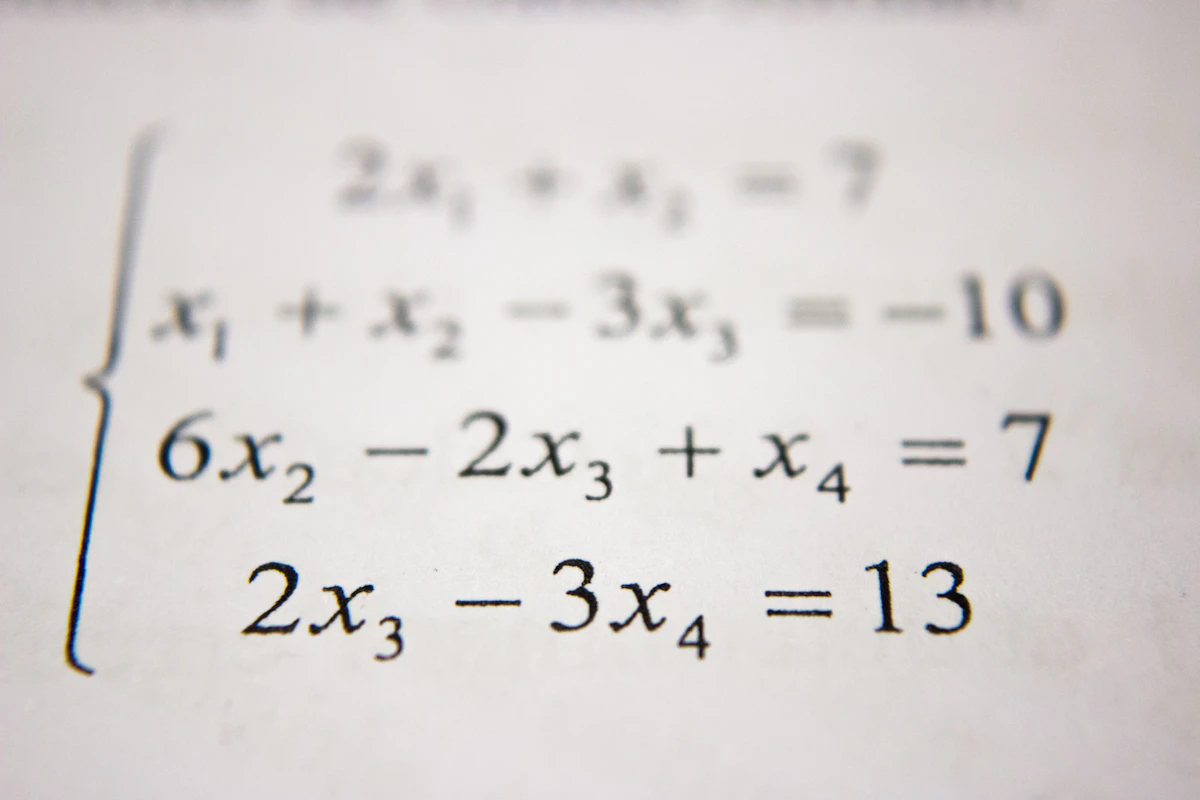
At the epicenter of the controversy is Dr. Tristan Buckmaster, an associate professor of mathematics at NYU's Courant Institute. Throughout August 2026, Buckmaster had been collaborating closely with Dr. Levent Alpöge on a longstanding question within the Navier-Stokes equations, the fundamental partial differential equations that govern fluid dynamics, aerodynamic drag, and weather patterns. Specifically, the mathematicians were investigating blow-up solutions: scenarios in which fluid velocities theoretically accelerate toward infinity, breaking smooth physical continuity.
However, the project crossed into dangerous territory when unconfirmed rumors circulated through Silicon Valley that Anthropic—where Alpöge works as a research scientist—was preparing a major scientific breakthrough on one of the Millennium Problems. Spurred by competitive paranoia, OpenAI mobilized its frontier reasoning infrastructure, deploying an autonomous research model to attack the exact same mathematical formulation. In less than a week, OpenAI announced it had beaten every human mathematician to the prize, claiming a formal solution to the Navier-Stokes existence and smoothness problem.
The Closed-Door Ultimatum: 'Throw Levent Under the Bus'
What followed behind closed doors reveals the stark cultural chasm between academic scholarship and high-stakes tech warfare. Over the weekend preceding the public announcement, Sébastien Bubeck, the leader of OpenAI's mathematical research initiative, initiated urgent communications with Buckmaster.
Bubeck presented what appeared on the surface to be a generous overture: Buckmaster could publish his preprint first, take lead authorship on OpenAI's formal paper, receive substantial computational grants, and collect OpenAI's endorsement for the Clay Institute's $1 million bounty. But the arrangement came with an absolute, non-negotiable condition: Buckmaster had to completely remove Levent Alpöge from the publication.
Because Alpöge was employed by Anthropic—the rival lab founded in 2021 by former OpenAI executives concerned over corporate recklessness—OpenAI refused to permit an Anthropic researcher's name on what it intended to market as an exclusive company triumph. Buckmaster flatly rejected the demand, stating that discarding his primary collaborator would violate every standard of academic integrity. When Buckmaster signaled that he would publicly disclose the coercive negotiation, the exchange reportedly turned combative, with Buckmaster recounting warnings that taking on a trillion-dollar frontier AI company would irreparably damage his academic career.
The Codex Ingestion Controversy
Buckmaster's distress deepened beyond authorship politics into suspicions regarding data integrity. While working on complex derivations, Buckmaster had utilized OpenAI Codex to clean, reformat, and manage intermediate mathematical code and Lean proof scripts. Given that commercial AI providers routinely ingest interaction telemetry for model post-training, Buckmaster questioned whether OpenAI's autonomous agents had inadvertently scraped his private, unpublished proof strategy to accelerate their own final derivation.
OpenAI issued an emphatic denial, stating that it was categorically impossible for Buckmaster's prompts to have influenced its model, asserting that no user interaction data past early July had entered the evaluation environment. Nevertheless, the temporal alignment of Buckmaster's private computational experiments and OpenAI's sudden sprint ignited furious debate across academic forums regarding the risks of running proprietary research through commercial cloud AI tools.
Academic Outcry and the Erosion of Communal Science
The dispute has provoked widespread condemnation from the international mathematical establishment. Prominent mathematicians, including Fields Medalist Peter Sarnak of the Institute for Advanced Study in Princeton, openly praised Buckmaster for resisting corporate pressure. Sarnak remarked that this form of commercial arm-twisting was unprecedented in modern mathematics, commending Buckmaster for defending the communal ethos of the discipline.
On Monday night, hours before OpenAI went live with its press release, Buckmaster posted three preliminary papers alongside an 1,870-word historical chronicle detailing the timeline of events. In his account, Buckmaster emphasized that the primary mathematical breakthrough belonged not to himself or OpenAI's models, but to Spanish mathematicians Diego Córdoba and Luis Martínez-Zoroa, whose earlier foundational work on fluid boundary forces established the mathematical scaffolding that AI systems subsequently traversed.
What Remains of the Human Scholar?
Beyond corporate disputes and intellectual priority battles, the episode leaves human mathematicians confronting an existential crisis. In reflections following the announcement, Buckmaster voiced an unsettling vulnerability shared by researchers worldwide: the realization that brute-force compute clusters can now leapfrog decades of patient human inquiry in a single weekend.
When autonomous neural networks can absorb partial human insights, orchestrate millions of automated verification steps, and deliver formal proofs at commercial speed, human researchers risk being demoted from pioneers of insight into clerical interpreters of synthetic outputs. As OpenAI teases that it has already initiated work on a second Millennium Prize Problem, the global mathematics community is left reckoning with a reality where intellectual discovery is increasingly dictated by corporate balance sheets rather than human curiosity.
Fact-Checked Sources & Verified References
- In OpenAI vs. Anthropic, an N.Y.U. Mathematician Comes Out Bruised — The New York Times
- OpenAI's Historic Math Solution Overshadowed by Credit Controversy — Axios
- 'Immature playground boasting': Mathematicians uneasy at OpenAI's Millennium claim — The Guardian
- On the Navier–Stokes Millennium Prize Problem — OpenAI Research
Sources & References
Related Coverage
Anthropic Projects Consecutive Quarterly Profitability as Enterprise Claude Demand Defies Foundation Model Margin Squeeze
AI & ModelsAnthropic Selects Nasdaq for Landmark Public Listing as Frontier AI Commercialization Accelerates
AI & ModelsAnthropic CEO Dario Amodei: 'For Too Long the Industry Lied' About Frontier AI Risks as Tech Leaders Back Slowdown Calls
Discussion (0)
Be the first to share insights on this story.