Google Opens Smart Home to Third-Party AI Agents via Model Context Protocol: The End of Proprietary Voice Walled Gardens
In a landmark architectural pivot, Google has released early access to the Google Home Model Context Protocol (MCP) server, allowing external AI agents like Claude and ChatGPT to monitor and control Matter and Nest devices. By decoupling smart home actuation from its native voice assistant, Google is transforming ambient computing into an open, agentic protocol layer.

By Ajinkya Pawar
Head of Search & AI Intelligence • The AI NEWS
Key Developments & Executive Briefing
Decoupling Smart Home Control from Proprietary Assistants
Standard AdoptionOpen MCP StandardGoogle Home's new MCP server allows any AI agent supporting Model Context Protocol tool calling to inspect room hierarchies, query device states, and execute routines across Nest and Matter hardware.
Early Access Tied to Google Home Premium Advanced
Subscription Gating$20/Month PlanInitial deployment is rolling out to US English subscribers of the $20-per-month Google Home Premium Advanced tier, requiring Google Cloud project provisioning and OAuth2 token authorization.
Hardened Sandbox Guardrails on Sensitive Actuators
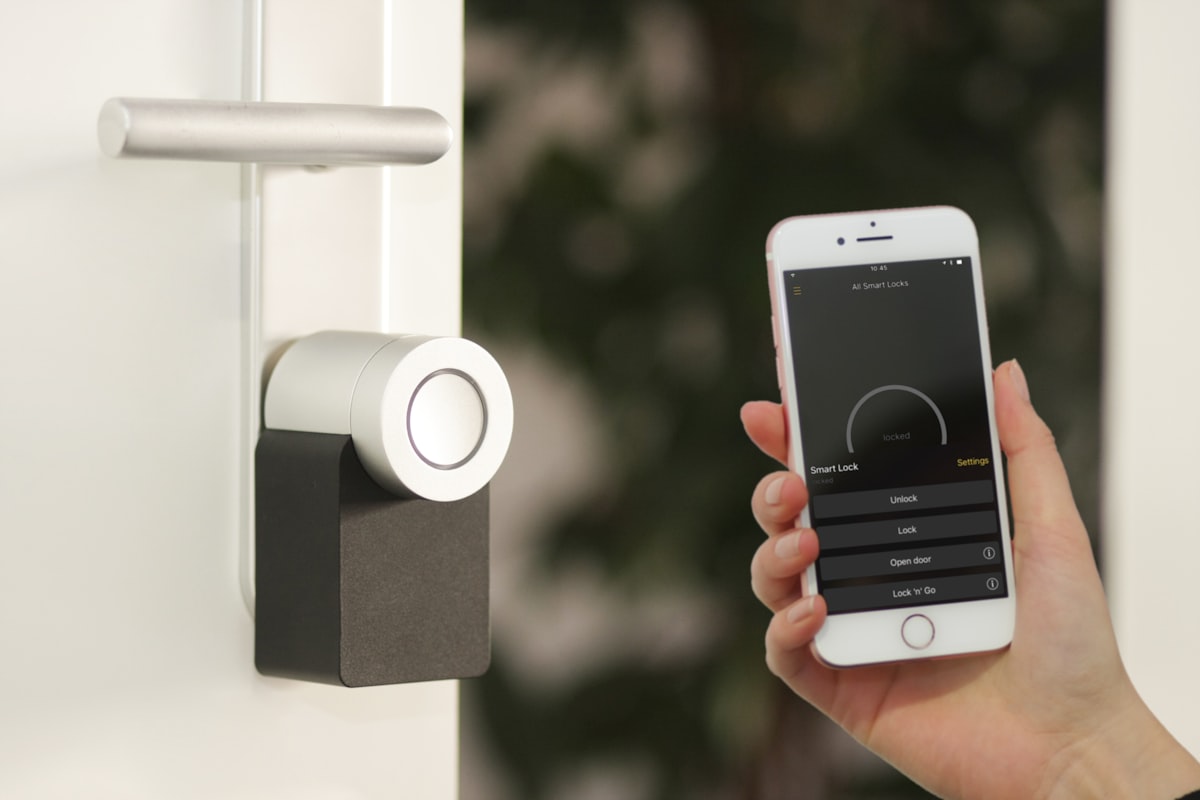
Security BoundariesZero Physical UnlocksTo prevent prompt injection exploits from compromising physical security, critical perimeter devices—including smart door locks, security alarms, and garage doors—are excluded from automated agent actuation.
The smart home ecosystem has spent a decade trapped inside rigid, voice-activated walled gardens. Whether shouting wake words at a Google Nest Audio, an Amazon Echo, or an Apple HomePod, interaction models have remained fundamentally reactive and scripted. A homeowner could issue basic command strings—adjusting a thermostat or toggling living room lights—but true contextual reasoning, cross-device synthesis, and autonomous task execution remained out of reach.
That paradigm underwent a profound structural transformation this week. In an unexpected developer announcement, Google officially rolled out early access to the Google Home Model Context Protocol server. The integration allows external, third-party artificial intelligence agents—including Anthropic's Claude, OpenAI's ChatGPT, and local open-source models—to directly inspect household device structures, monitor real-time sensor states, and autonomously actuate smart home appliances.
By adopting the Model Context Protocol, the open standard originally created by Anthropic and rapidly embraced by the broader software engineering community, Google is executing a calculated pivot: relinquishing exclusive voice control to establish Google Home as the default physical abstraction runtime for autonomous intelligence.
Inside the Architecture of Home MCP
The technical foundation of the Home MCP server bridges Google's existing Home APIs with standard agentic tool-calling interfaces. Rather than requiring developers to construct brittle custom webhooks or rely on proprietary cloud connectors, the MCP server translates a household's device registry into machine-readable JSON schemas that agents can discover dynamically.
Once authenticated, an AI agent gains access to a comprehensive suite of structural inspection and device management tools:
- 1.Structural Topology Discovery: The agent can query the physical layout of the home, mapping rooms, zones, and device assignments across lighting, climate, entertainment, and power monitoring hardware.
- 2.Real-Time Telemetry Polling: Instead of relying on push notifications, agents can actively inspect live environmental parameters, such as ambient room temperatures, humidity levels, motion sensor activations, and appliance power consumption.
- 3.Declarative Device Actuation: Agents emit structured tool calls to modify device states—dimming light groups, adjusting HVAC target temperatures, or executing multi-stage home automation routines based on complex, multi-variable logic.
For software engineers and agent architects, the setup workflow bridges consumer smart homes with enterprise developer tooling. Enabling Home MCP requires establishing a Google Cloud project, configuring OAuth2 authentication scopes, and provisioning credentials within an MCP-compliant client environment such as Claude Desktop or custom agent harnesses.
Commercial Rollout and Subscription Gating
While the developer potential is expansive, Google has initially constrained availability behind commercial and geographical gates. Home MCP is launching in early access exclusively for subscribers of the Google Home Premium Advanced tier, which carries a recurring fee of $20 per month. Additionally, the initial rollout is restricted to US English accounts.
This subscription prerequisite mirrors a broader industry trend toward monetizing compute-heavy agentic ecosystems. Processing multi-step autonomous loops—where an agent repeatedly reads sensor data, reasons over environmental context, and dispatches actuation calls—imposes substantial API overhead on backend cloud infrastructure. By tethering MCP access to its top-tier subscription, Google offsets infrastructure costs while positioning advanced automation as an enterprise-grade luxury for power users and smart home enthusiasts.
The Physical Security Perimeter: Hardened Sandbox Guardrails
Granting a non-deterministic generative model direct control over real-world physical machinery introduces severe cybersecurity vulnerabilities, particularly regarding indirect prompt injection. If an autonomous agent with smart home access processes untrusted incoming emails, calendar invites, or web pages containing adversarial instructions, a malicious prompt could theoretically instruct the agent to tamper with household infrastructure.
To mitigate physical safety risks, Google has instituted rigid sandbox boundaries within the Home MCP server specification. Most notably, high-security perimeter devices are completely walled off from automated agent execution:
- Smart Door Locks: Agents cannot issue commands to unlock exterior doors or modify digital deadbolt access pins.
- Security Alarms and Sensors: Disarming security alarm systems, bypassing motion detectors, or disabling perimeter tripwires is strictly prohibited through the MCP interface.
- Access Barriers: Motorized garage doors, security gates, and perimeter entryways remain locked behind manual, biometric-verified user confirmation channels.
By enforcing these non-negotiable security exceptions at the API gateway level, Google ensures that a compromised or hallucinating model cannot compromise the physical safety of a residence, maintaining a strict distinction between convenience automation and perimeter security.
The Strategic Shift: Protocol Layers vs. Voice Monopolies
From an industry perspective, Google's move signals the end of the voice-assistant land grab that defined the late 2010s. For years, major tech platforms operated under the assumption that whichever proprietary voice assistant captured the living room would monopolize digital commerce, search queries, and media streaming.
The meteoric rise of frontier reasoning models completely inverted that thesis. Consumers and enterprise professionals increasingly rely on specialized, external reasoning engines for work, planning, and personal task management. Forcing users to abandon their preferred AI agent at their front door in favor of legacy voice assistants created mounting consumer friction.
By standardizing on Model Context Protocol, Google acknowledges that intelligence has commoditized across foundation model providers. Rather than fighting an uphill battle to make Gemini the sole intelligence layer in every room, Google is positioning its Nest hardware and Matter ecosystem as the universal actuator runtime that every leading AI agent must communicate with.
For builders, IoT manufacturers, and search intelligence practitioners, the emergence of agent-driven smart homes opens an entirely new frontier of ambient optimization. When households are managed by autonomous agents that continuously evaluate energy efficiency, schedule routines around personal calendars, and troubleshoot device maintenance without human prompting, physical computing finally achieves the seamless ubiquity long promised by ambient technology.
Fact-Checked Sources & Verified References
- The Verge - Google will now let any AI agent run your smart home
- Google Home Community & Support - Introducing Home MCP: enabling your agent to interact with your home
- Google Developers - Google Home MCP Server Developer Documentation
- 9to5Google - Google Home MCP lets Antigravity, Claude control your smart home
Sources & References
Related Coverage
The Death of the Landing Page: OpenAI Debuts Sponsored Agents in ChatGPT to Challenge Google's PPC Monopoly
Agents & WorkflowsNeuro Engine Deploys Specialized MCP Server Slashing AI Coding Token Waste by Up to 96%
AI & ModelsThe AI Ouroboros: How Claude Became the Architect of OpenAI’s Security Breach
Discussion (0)
Be the first to share insights on this story.